
- Davis Marine
- Boat services
- Hull antifouling
Hull antifouling · Sydney Harbour & beyond
Boat Antifouling in Sydney
Lift, wash, antifoul, anodes, Propspeed and polish — booked, coordinated and quoted as one job. We look after the yard so you get the boat back faster and cleaner than she went in.
What growth actually costs you
A dirty bottom is the most expensive thing on your boat
If your boat lives on the water, marine growth builds up on the underside of the hull. It does not just look bad — it changes how the boat behaves.
Knots lost
Heavy growth on the hull can slow a powerboat by more than five knots. You feel it before you see it.
More fuel burnt
A fouled hull can increase fuel consumption by over 30%. At today’s prices, an antifoul often pays for itself in a season.
Months between checks
Boats that live afloat or are used regularly should be checked every year to assess whether the coating needs reapplying.
One job, one number
What the antifouling package includes
Everything below the waterline in a single visit to the hardstand, plus the annual polish above it.
-

Antifoul application
Pressure wash, scrape and prep, then a fresh coating from the waterline down. Antifouling paint carries an anti–bacterial compound designed to stop marine life taking hold and to shed what does as the boat moves through the water.
-
Anodes as required
Sacrificial anodes are what stop your shafts, props, rudders and trim tabs corroding. We check every one while she is out, and replace what has been eaten away.
-
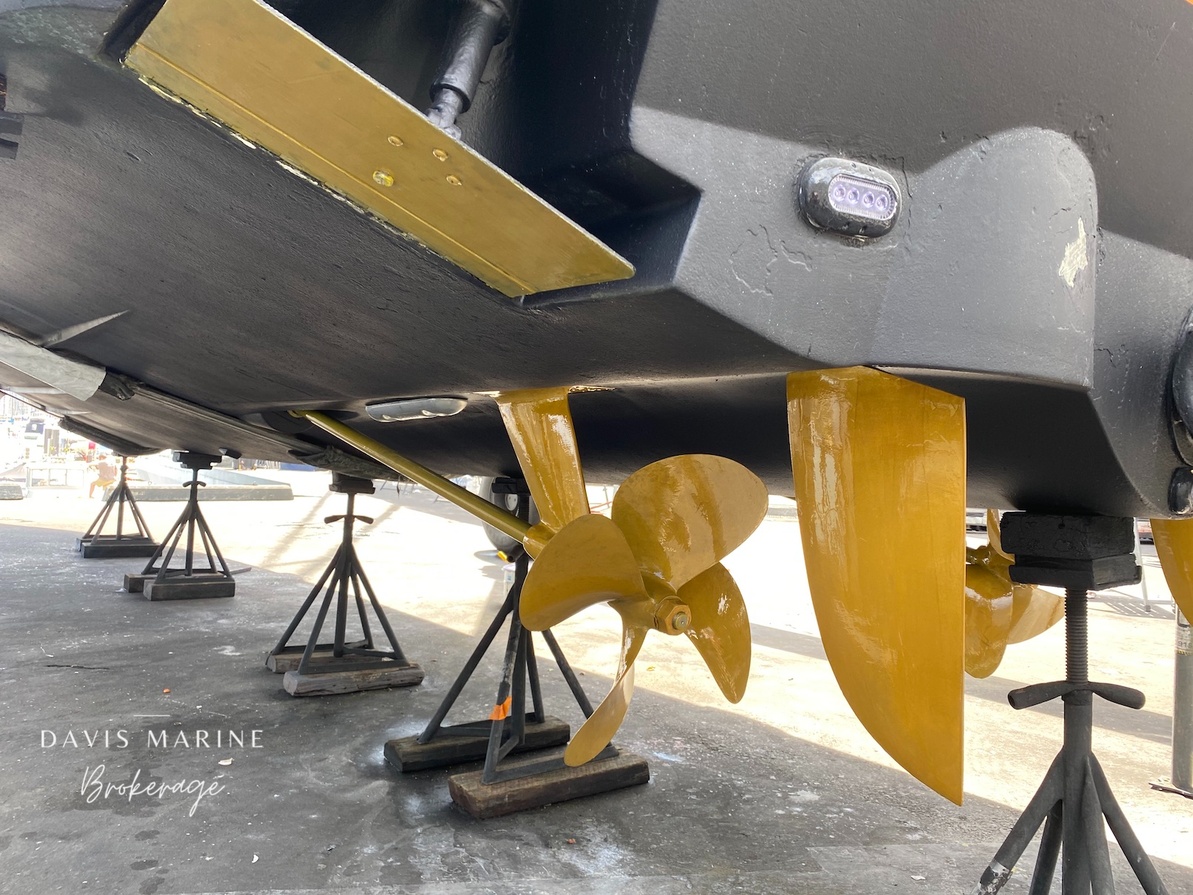
Propspeed on props and running gear
Propspeed inhibits growth on propellers and running gear by creating a long–lasting, ultra–smooth surface. For the boat that means less drag, more speed and less fuel — and no barnacles welded to your props next season.
-
Thrusters, tunnels and the bits people forget
Bow and stern thruster tunnels foul faster than anything else on the boat and are the first thing to fail when you need them most. They get coated too, along with intakes, transducers and the boot top.



And while she is out of the water: the annual hull and superstructure polish. It is the cheapest time to do it — she is already on the hard, already accessible, already scaffolded. See boat detailing prices and cut and polish. Anything mechanical — shaft seals, cutless bearings, sea cocks, service — goes to engines and servicing in the same visit.
The question we get most
How often should I antifoul?
Every twelve months is the honest default for a boat that lives in the water on Sydney Harbour. Whether she actually needs paint at twelve months depends on five things.
-
How much you use her
A boat that moves regularly stays cleaner — water flowing over the hull is what makes antifouling work. A boat that sits on a mooring all winter fouls far faster than one that goes out every second weekend.
-
Where she is berthed
Warm, still, nutrient–rich water grows more. A pen up a creek fouls faster than an open marina berth with tidal flow. Pittwater, Middle Harbour and the Hawkesbury all behave differently.
-
What is already on the hull
Hard, ablative and self–polishing coatings all wear differently, and a hull with years of built–up old paint may need stripping back before anything new will bond properly.
-
The season
Sydney’s growth season is brutal. Coming out in spring buys you a full summer of clean hull; coming out in autumn protects a boat that is going to sit.
Signs you are already overdue
- She will not hold the speed she used to at the same revs
- Fuel burn has crept up without you changing anything
- Green or brown fuzz visible along the waterline at the berth
- Weed streaming off the boot top when you pull away
- The hull feels furry or gritty when you dive on it
- Barnacles on the props, or the thruster sounds strained
Not sure? We can have a look before you commit to a lift — get in touch.
What actually happens
Your boat’s week on the hard
You do not need to be there for any of it. Hand us the keys and we will hand them back.
-
We book the slot
We deal with the yard, the travel lift and the hardstand — and we book around your calendar, not theirs. If we manage the boat already, you may only hear about it afterwards.
-
Lift and pressure wash
She comes out in the slings and gets washed down immediately, while the growth is still soft. That first wash tells us most of what we need to know about the state of the coating.
-
Prep, mask and inspect
Scraping, sanding and masking to a clean waterline, and a proper look at the anodes, running gear, shaft seals, sea cocks and skin fittings while everything is accessible and dry.
-
Antifoul, anodes, Propspeed
Coats on, anodes replaced, Propspeed on the props and running gear. If we found anything on the inspection, you get a call before we touch it — not a surprise on the invoice.
-
Polish and splash
The hull and superstructure polish goes on while she is still on the hard, then back in the water and back on her berth. You get photos of the finished job either way.
-
And the year after
We keep the record — what paint went on, how many coats, which anodes, what the hull looked like. Next year we already know what she needs. That is what vessel management is.
Our own work
Fresh out of the shed
Boats we have antifouled at the hardstand — hulls, running gear, thrusters and props.


What it costs
Why antifouling is quoted, not listed
Unlike a detail, an antifoul is not one job — it is a yard booking, a lift, a wash, prep, paint, hardware and a splash. Six things move the number.
-
Length and wetted surface
Not just length overall — draft and beam decide how much hull is actually under water and how much paint it takes. A deep–keeled yacht and a planing cruiser of the same length are very different jobs.
-
What is already on there
A hull in good order needs a wash and two coats. A hull carrying a decade of old paint may need sanding back or stripping first, which is the single biggest swing in any antifoul quote.
-
Yard, lift and hardstand fees
Every yard prices the lift and the days on the hard differently, and the bigger the boat the fewer yards can take her. We quote yard costs through at cost so you can see them.
-
Running gear and anodes
Propspeed on twin shafts, props and rudders is more work than a single outdrive. Anodes are replaced as required and priced as parts, not guessed at.
-
Paint choice and coats
Hard, ablative and self–polishing coatings cost differently and last differently. We will tell you what suits how you actually use the boat rather than defaulting to the most expensive tin.
-
What else you do while she is out
Polish, cut and polish, servicing, survey or sales preparation all get cheaper when they share the same lift. Doing them separately is what costs money.
How we quote. One number covering lift, wash, prep, paint, anodes, running gear and splash, with yard fees itemised. You see the scope before we book anything, and if the wash reveals something we did not expect, we stop and call you.
Where we work
Antifouling across Sydney — and beyond it
We are based at Fergusons Marina in Mosman and work across Sydney Harbour, Middle Harbour and Pittwater — including Mosman, Clontarf, Cammeray, Northbridge, Seaforth, Killarney and Roseville. Outside Sydney we organise antifouling Australia–wide through our network of partner yards: tell us where the boat is kept and we will arrange the lift, oversee the work and report back. See all our boat services or find us here.
Antifouling, answered
Frequently asked questions
What is antifouling?
Antifouling is the process of protecting your hull from marine growth by applying a protective paint layer to the bottom of your boat. It is not standard paint — antifouling paint contains an anti–bacterial compound and other chemicals specifically designed to obstruct the growth of marine life, and to help shed what does take hold as the boat moves through the water.
Why does antifouling matter?
Because growth on the underside of the hull changes how the boat performs. Heavy growth can slow a powerboat by more than five knots and increase fuel consumption by over 30%. It also makes the boat harder to handle, harder to sell, and lets marine growth get into thruster tunnels, intakes and running gear where it does real damage.
How often should I antifoul my boat?
Boats that live afloat, or that are used regularly, should be checked every year to assess whether the coating needs reapplying. Whether it actually needs paint at twelve months depends on how much you use her, where she is berthed, what coating is already on the hull and the time of year. We will tell you honestly if she can go another season.
What is Propspeed?
Propspeed is a product that inhibits growth on propellers and running gear. It creates a long–lasting, ultra–smooth surface, which for boat performance means less drag, more speed and less fuel usage. It is included in our antifouling package.
Do I need new anodes every time?
Not always — anodes are replaced as required, not automatically. They are sacrificial by design, so we check every one while the boat is out and replace the ones that have been eaten away. Anodes are the cheapest insurance on a boat: they are what stops your shafts, props and rudders corroding.
How long will my boat be out of the water?
For a straightforward antifoul on a hull in reasonable order, a few days — the paint needs time to cure between coats. Add stripping, running gear work, a polish or any servicing and it stretches. We give you the days when we quote, and we book the yard slot to suit your calendar.
Can you do it while I am away?
That is how most of our antifouling is done. You do not need to be there for the lift or the splash. We coordinate with the yard, oversee the work and send you photos of the finished job. Owners on vessel management often just get the report.
Should I antifoul before selling my boat?
Usually yes, and almost always before a pre–purchase survey. A buyer’s surveyor will have the boat lifted, and a fouled bottom with wasted anodes reads as deferred maintenance on the whole vessel. It is far cheaper to antifoul than to argue about it at the negotiation. See sales preparation and sell my boat, or find out what your boat is worth first.
Can I get the antifoul, a detail and a service done in one lift?
Yes, and it is the cheapest way to do all three — one lift, one hardstand booking, one trip for everyone involved. See detailing prices, engines and servicing, or hand the whole programme over with vessel management.
Davis Marine Brokerage
Ready to book her in?
Tell us the boat, where she is kept and roughly when suits. We will handle the yard, the lift and everything in between.