There’s a variety of different drive types available and so it can be confusing if it’s not something you’ve come across before. In this article, we’ll explain what IPS is in some detail to help you better understand what is it for and to know if it might be a good fit for you.
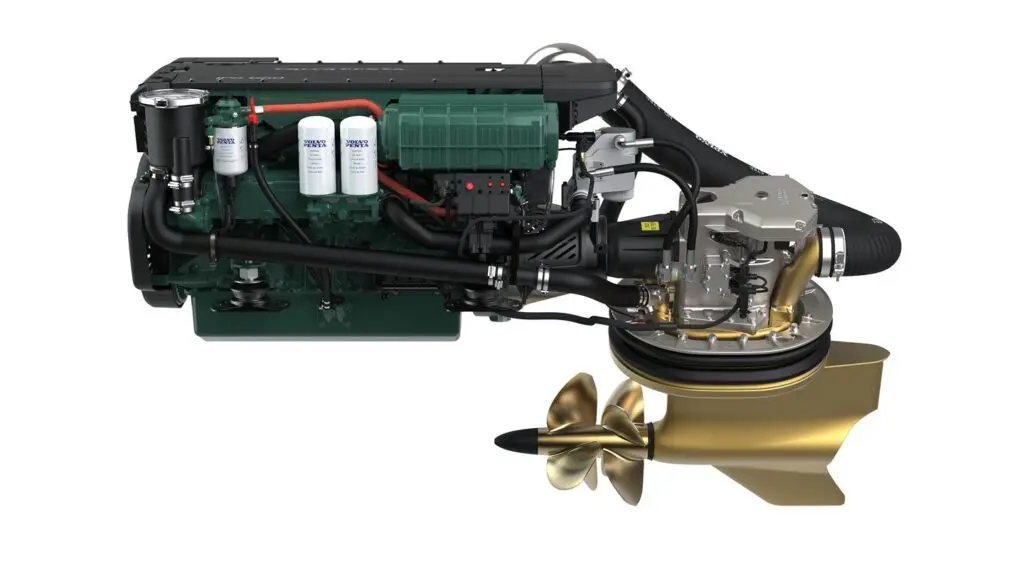
To start with, IPS stands for Integrated Propulsion System. It’s a combined engine and pod drive system for the boat. The pod drive system that is mounted through the hull, beneath the stern. Although the drives only move up to 30 degrees to either side, along with the twin counter rotating propellers, this is sufficient to be able to move the boat in any direction! This system eliminates the need for direct shafts, struts, and seperate rudders and offer much more control than any conventional drive type. IPS units come in a few power sizes ranging from D6 to D13, or 300 to 1000hp per unit, to fit with boats sized from around 45 feet up to around 60 feet in length.
The Volvo IPS units have forward-facing, counter-rotating traction propellers that create horizontal thrust and are designed with some clever features such as integrated exhausts, which exits at the aft end of the leg. In addition to this, the whole pod/leg unit is flat in shape, forming an integrated rudder function. The design that allows for a much smaller engine room and so it creates more useful interior space, usually most benefited by a large or even full beam master cabin.
Volvo IPS Drive Pro’s and Cons:
Better Performance
You can expect great things with IPS from speed to performance, the forward-facing propellers produce higher speeds and all with better fuel economy. So if you’re planning to do long range cruising, you’ll definitely get superior range and performance over conventional shaft drive types.
Peaceful Cruising
If you’re looking for the most peaceful experience on the water with regards to noise, look no further than IPS. With the exhaust exiting underwater, there’s much less noise than every other drive type.
The advanced gear and drive system is extremely smooth and so you can’t help but notice how fluid the drives feel.
With other drive types, you’ll feel much more vibration coming through and into the boat.
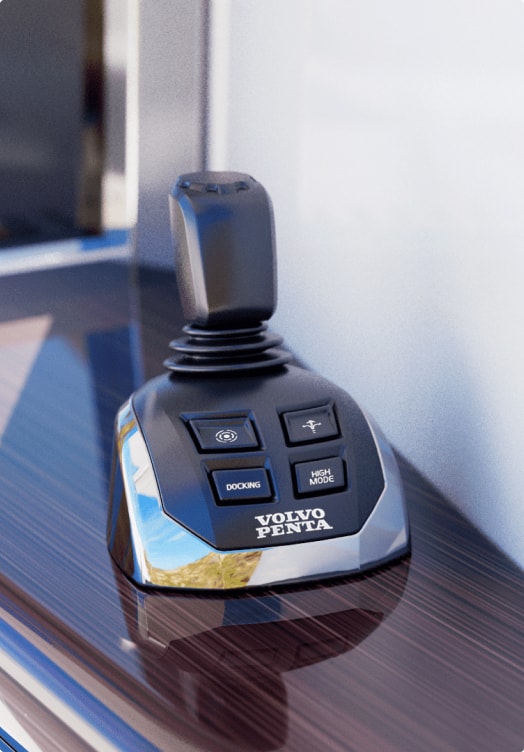
Superior Docking Control (Parking control)
With the IPS joystick controller, you are able to simply direct the joystick with only finger strength and the boat will mimic the movement! Push gently to one side, and the boat will crab sideways. Twist and the boat will rotate on the spot. Select position hold and you can step away from the helm and the boat will work to keep you stationary.
Most importantly to advocates of the IPS system, if you struggle with simultaneously managing multiple controls, such as the throttles, steering wheel and thrusters, IPS simplifies everything into needing only one controller to think about, which is a serious life changer for docking.
Higher Servicing Costs
More machinery, simply means more maintenance and in turn, more cost!
Where conventional shaft drive is very simple, there’s little to service and maintain, the opposite is true for the like of IPS units. There’s more moving parts and what’s more, more of those parts are in the water all the time. If you like the idea of the benefits that IPS offers, you’ll need to consider the cost to provide those benefits to you. For those aren’t able or prepared to maintain the IPS units properly, you’re likely to run into problems that poor maintenance inevitably leads to.
If on the other hand, you’re more than able and or willing to pay for maintenance costs that brings whole host of performance benefits
Another consideration is the risk of not having the required service support when in remote regions. If you aim to do some serious offshore / extended trips you’d be better served with shaft drives, knowing that service will be more available for conventional drive types.
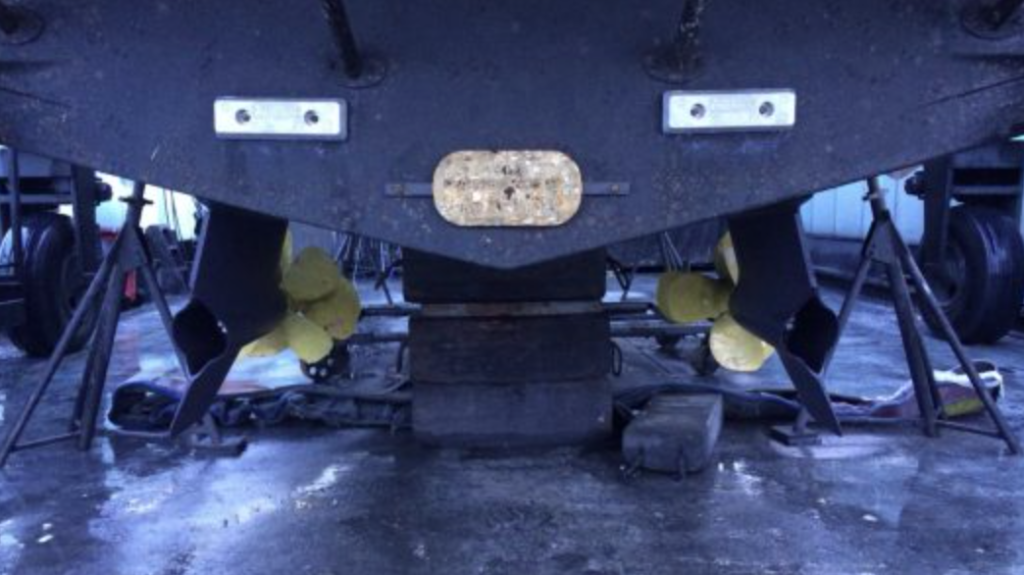
Volvo is focused on delivering power solutions that make boating is easy for all. With a Volvo IPS drive, higher servicing cost is the price for the benefits of getting the best performance, peaceful cruising, and superior docking control. With IPS, you can sit back, relax, and enjoy boating with ease. While there’s many different drive types, it’s key to find the right one for your budget and preferences.
Common Questions about Volvo IPS:
Is IPS easier for docking?
Yes. With the IPS joystick controller, you are able to simply direct the joystick with only your fingers. IPS simplifies everything into needing only one controller to think about, which is a serious life changer for easier docking.
Is IPS expensive to run and maintain?
When compared to shaft drives, yes it is more expensive, but the benefits it provides may be worth the cost to you.
What is IPS for boats?
IPS stands for Integrated Propulsion System. It’s a combined engine and pod drive system for the boat. The pod drive system that is mounted through the hull, beneath the stern.
MORE ARTICLES