When we talk about ocean pollution, it’s important to understand its impact on marine life. Waste mismanagement and chemical pollution from individual waste from boating activities, wastes from land, etc, are causing significant harm, now more than ever. Whether we look at the great pacific garbage patch, dead zones, or the sources of marine pollution, it’s evident that human activity poses a serious threat to the environment.
Quick Facts about Ocean Pollution
- By 2050, plastic is expected to outnumber fish.
- Dead zones, where marine life struggles due to low oxygen levels, cover about 250,000 square kilometres in almost 500 areas worldwide.
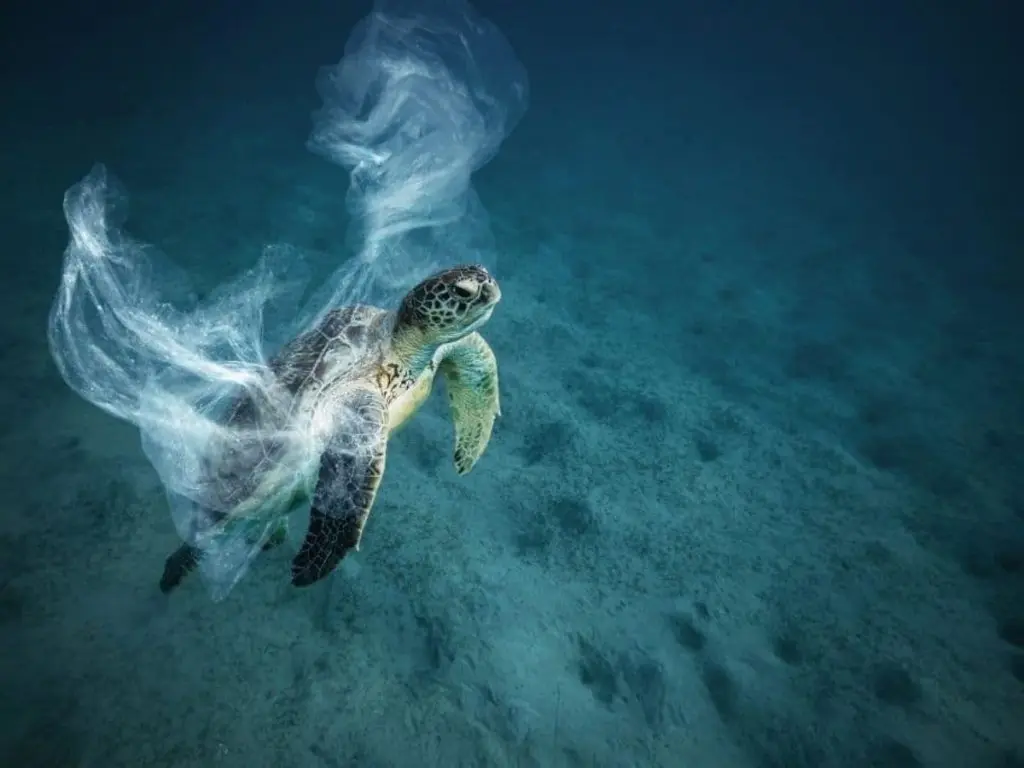
- Plastic pollution results in the annual deaths of over 100,000 marine mammals and more than 1 million seabirds.
- The ocean contains about 5.25 trillion pieces of plastic, with around 4 billion microfibres per square kilometre and nearly 300,000 tons of floating plastic.
- China alone contributes nearly 9 metric tons of mismanaged plastic annually, similar to the combined total of the next four top countries.
- Plastics take up to 1000 years to decompose, breaking down into smaller pieces or toxic chemicals.
- Ocean currents concentrate marine litter into gyres, and there are now five such gyres with in the earth’s ocean.
- Just 10 rivers contribute to 90% of marine debris worldwide.
- Ocean acidification, caused by carbon dioxide dissolving into seawater from burning off fossil fuels, continues to lower the pH level of the water.
- Reports say, tyre dust from around the world is a significant source of microplastic pollution in the ocean.
- Certain marine pollution types disproportionately affect specific marine animals, disrupting the global food chain.
- Plastic production has skyrocketed from 2.3 million tons in 1950 to 448 million tons in 2015, with estimates nearing 1 billion tons by 2050.
- Despite China leading in mismanaged waste, the United States has a higher waste-to-person ratio.
- Between 1950 and 1998, over 100 nuclear bomb tests occurred in the sea.
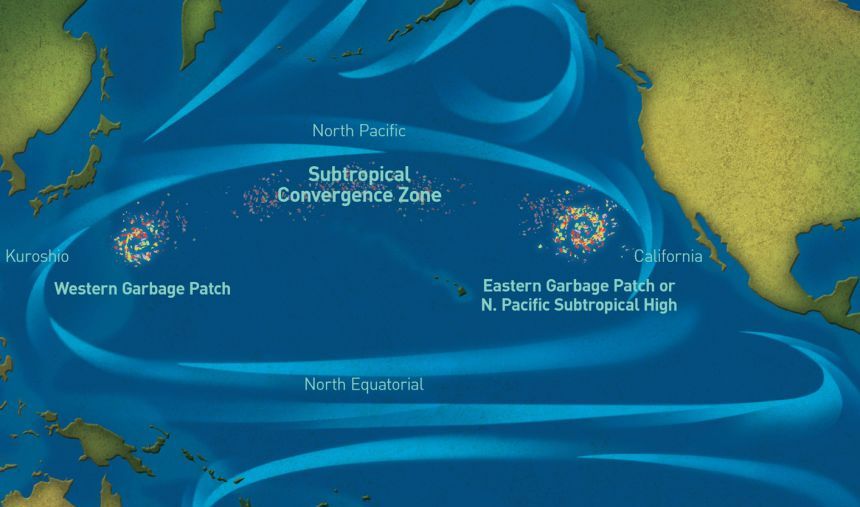
Great Pacific Garbage Patch
The great pacific garbage patch or the pacific trash vortex is a big concern when we talk about ocean pollution. It’s like a huge collection of plastic waste and other junk floating around in the North Pacific Ocean. This happens because of swirling ocean currents called the ‘North Pacific Subtropical Gyre’.
You might imagine it as a giant island made of trash, but it’s actually a lot of tiny pieces of plastic, called microplastics. These are so small you can’t see them without a special tool. Many expert ecologists and oceanographers think there is also a lot of waste on the ocean floor under this swirling current. Research shows that more than 2/3 of marine pollution ends up there.
This garbage patch is huge, estimated to cover an area about twice the size of Texas, which is about 1.6 million square kilometres.
One study by the ‘Marine Debris Program’ said that even if we used 67 ships for a whole year to clean up the North Pacific Ocean, we’d only be able to clean up less than one percent of the garbage patch.
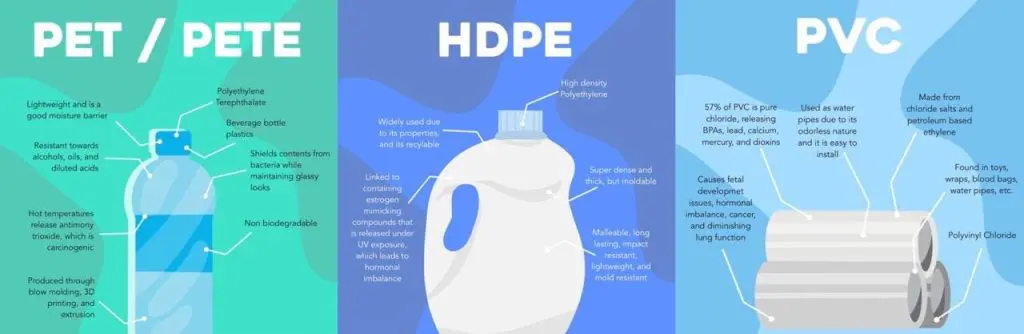
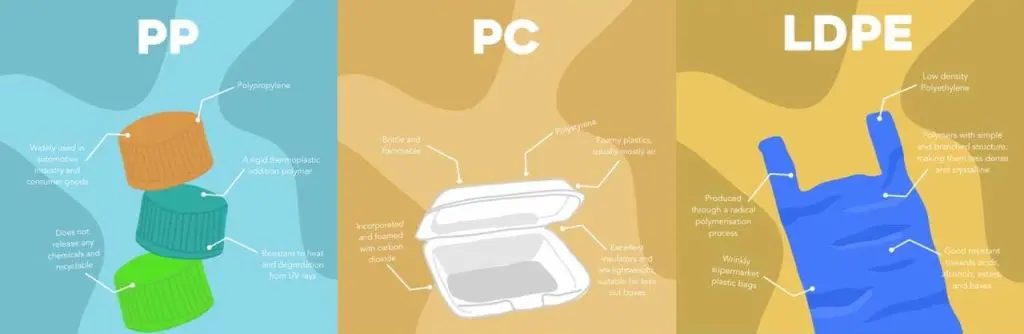
Types of Plastic Waste Humans Produce and Their Impact on the Environment
The main ones are single-use plastics like plastic bottles, food wrappers, and cigarette butts. These are often found polluting rivers, and from there, they flow directly into the ocean.
In rivers, the most common types of plastic waste are:
- Plastic bottles: 14%
- Food wrappers: 12%
- Cigarette butts: 9%
- Food containers: 6%
- Cotton bud sticks: 5%
- Cups: 4%
- Sanitary items: 3%
- Cigarette and smoking-related packaging: 2%
- Plastic straws and cutlery: 1%
- Plastic bags: 1%
Research on plastic samples from the ocean indicates that common types of plastic debris include polyethylene and polypropylene. These materials are used to make household items like plastic straws and bags. This situation also prompts local authorities in Sydney, NSW, to implement measures to mitigate marine pollution and promote responsible boat sale practices.
However, less common types of plastic such as PVC, PET, and PS are also found in the ocean but are rarer. Despite their rarity, they still contribute to marine debris because they sink to the ocean floor due to their higher density than seawater.
Besides consumer plastic waste, fishing gear also plays a significant role in marine pollution. A 2019 report by Greenpeace revealed that most large plastic debris in the ocean comes from fishing gear. Over half a million tons of commercial fishing gear are discarded into the ocean every year, posing a serious threat to marine life as fishing nets easily trap animals.
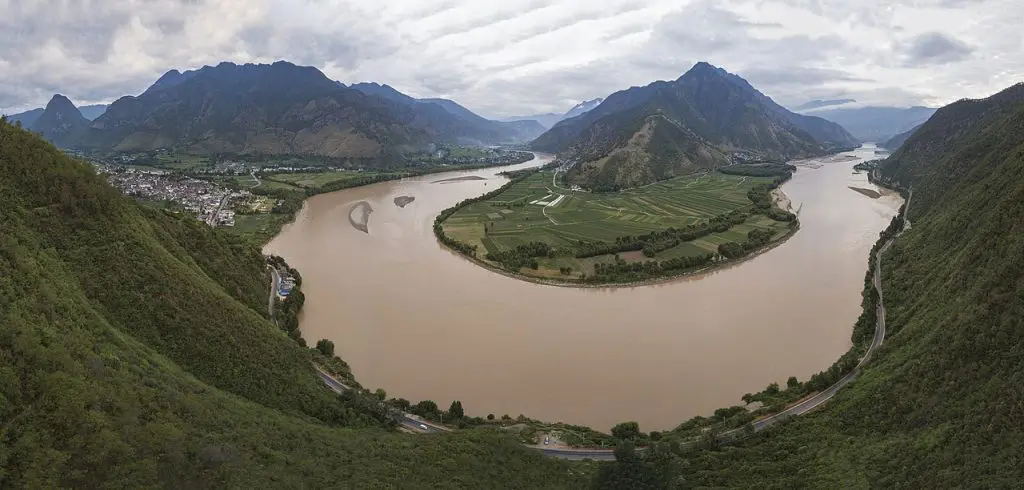
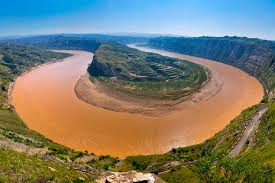
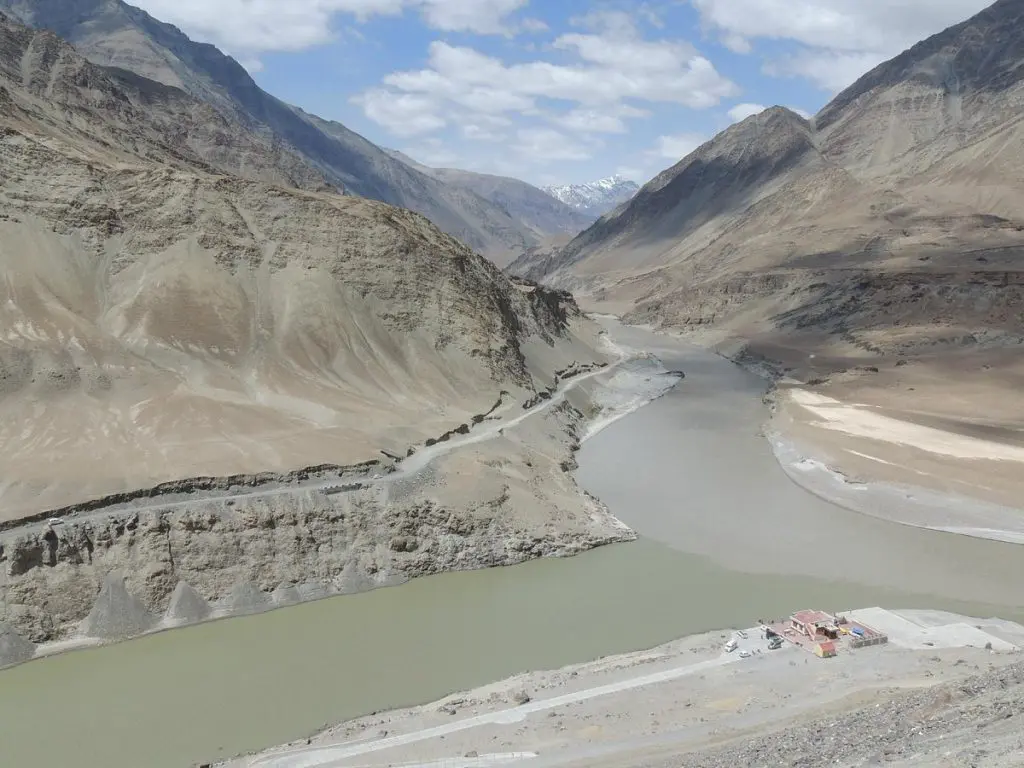
Top 10 Rivers Carrying Waste To The Ocean
Rivers are a major cause of ocean pollution from the land. Plastic waste from land goes directly into the ocean. These are the top 10 rivers causing the most pollution:
- Chang Jiang (Yangtze River), China: 1,469,481 tons
- Indus, Pakistan: 164,332 tons
- Huang He (Yellow River), China: 124,249 tons
- Hai He, China: 91,858 tons
- Nile, Egypt/Democratic Republic of the Congo /Tanzania/Burundi/Rwanda/Uganda/Kenya/Ethiopia/ Eritrea/South Sudan/Sudan: 84,792 tons
- Meghna, Brahmaputra, Ganges, Bangladesh/India: 72,845 tons
- Zhujiang (Pearl River), China: 52,958 tons
- Amur, Russia/China: 38,267 tons
- Niger, Nigeria: 35,196 tons
- Mekong, China/Myanmar/Laos/Thailand/Cambodia/Vietnam: 33,431 tons
These 10 rivers are responsible for over 90% of the waste that ends up in the ocean. Looking at land-based plastic pollution, a total of 9.5 million tons of plastic waste enter the ocean annually. Only 0.5 million tons of this comes from inland sources. The remaining 9 million tons come from coastal areas on land.
The Level of Plastic Pollution in the Ocean
When it comes to figuring out how much plastic is in the ocean, it’s hard to know for sure. But around eight million pieces of plastic junk find their way into the ocean every day. That’s about 12 million tons of plastic waste dumped into the sea each year.
Even though more people are becoming aware of ocean pollution, we’re still making more and more plastic. Back in 1950, we only made a little over 2 million tons of plastic. But by 2015, that number had shot up to 448 million tons. And by 2050, it could reach close to one billion tons.
Once plastic gets into the ocean, it’s tough to get rid of. Some experts say it can take up to 400 years for plastic to break down. And cleaning up all that plastic in the ocean is nearly impossible. While we can remove big things, like bottles, microplastics are too tiny to pick up.
Experts guess that around 5.25 trillion pieces of plastic waste are floating around in the ocean right now, based on estimates from 2015.
FAQs About Ocean Pollution Statistics
What’s the amount of waste in the ocean?
A 2006 Greenpeace report says about 10% of the plastic made each year ends up in the ocean.
How much pollution goes into the ocean yearly?
Experts think around 8 million metric tons of plastic go into the ocean every year.
How many ocean animals die each year from pollution?
Marine pollution causes over 1 million marine animals, including fish, birds, and other sea creatures, to die each year.
How does marine pollution harm wildlife?
Marine pollution, especially plastic, kills millions of animals each year, usually by starvation or getting caught in it. Nearly 700 species have been affected by plastic.
What percent of ocean pollution comes from land?
About 80% of marine pollution comes from land-based sources. The other 20% comes from boats and other marine sources.
What percent of ocean pollution is fishing nets?
Nearly 50% of the Great Pacific Garbage Patch is made up of fishing nets, according to a 2018 study. This happens because of a lot of fishing in the Pacific Ocean and ocean currents.
What percent of ocean pollution is plastic bottles?
It’s thought that about 15% of all litter in the ocean is plastic bottles and drink containers. This doesn’t include caps, labels, or wrapping.
What’s the Gulf of Mexico’s 8000-mile dead zone?
The Gulf of Mexico has a large area of polluted water caused by fertiliser and sewage washed into it by rain. This makes an area with low oxygen where marine life can’t survive, called a dead zone.
What’s ocean acidification?
Ocean acidification is when carbon dioxide from the air gets absorbed into the ocean. This happens because of burning fossil fuels and putting out more carbon dioxide. It’s bad for plankton and marine life in general.
MORE ARTICLES