Every boat owner eventually types the same question into Google: how much is my boat worth? Whether you’re planning to sell, refinancing, updating insurance, or just curious, the honest answer is that most of the numbers you’ll find online are wrong — and usually wrong in the direction that costs you money. Here’s how boat valuation actually works, and how to get a number you can rely on.

Why asking prices mislead you
The natural first step is to search the listing portals for boats like yours and note the prices. The problem: those are asking prices, not sold prices, and in the boat market the gap between the two can be significant. A boat listed at $450,000 may have sold at a fair bit less after months on the market — but the listing you saw only ever showed the original number.
Owners who price off asking prices tend to overprice, and overpriced boats go stale. Buyers and brokers watch the market; a boat that’s been listed for eight months invites low offers on that fact alone. Accurate valuation starts with sold-price data, which brokers track and portals don’t publish. You can see boats we have recently sold for a sense of what real results look like.
The factors that actually drive your boat’s value
Engine hours and service history. The engines and drives are the single biggest value component in most powerboats. Lower hours help, but a complete, documented service history matters more — a 900-hour engine with full records is worth more to a buyer than a 400-hour engine with none.

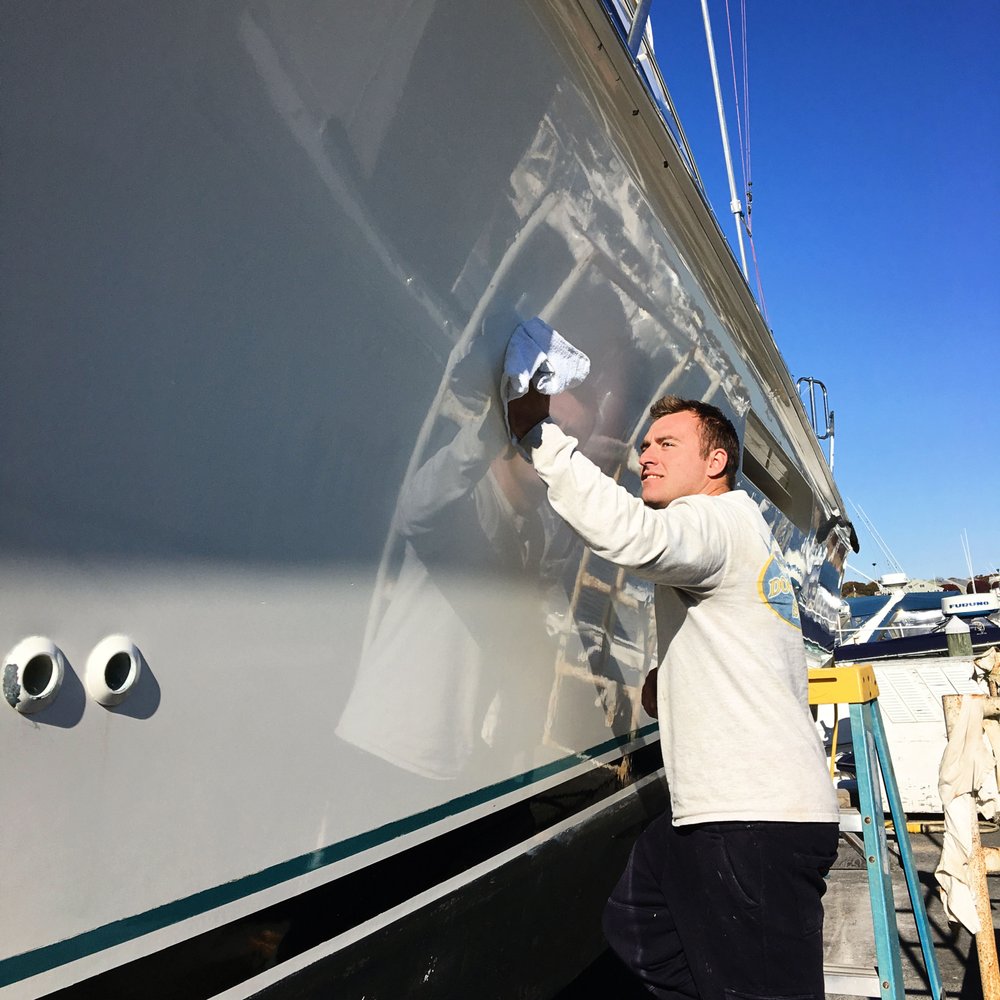
Condition and presentation. Gelcoat, upholstery, teak, antifouling, electronics — buyers price what they can see, and surveyors price what they can find. Deferred maintenance is always more expensive at sale time than it would have been at service time — our sales preparation service covers exactly this.
Options and inclusions. Generators, air conditioning, solar, bow and stern thrusters, upgraded electronics, tenders and davits all add value — though rarely their full purchase price. What they really do is make your boat sell faster than the identical model without them.
Make, model and reputation. Brands with strong reputations in Australia — and models with active owner communities — hold value better. Some imported models that are rare here can be harder to price and slower to sell, regardless of quality.
Age and market cycle. Depreciation is steepest in the first years, then flattens. Beyond that, the wider market moves: exchange rates affect import prices, fuel prices affect demand for larger cruisers, and seasonality matters — spring and early summer are the strongest selling windows in Sydney.
Where the boat is. A boat lying in Sydney, easy to inspect at a marina berth, is worth more in practice than the same boat on a distant swing mooring, because more buyers will actually come and see it.
The three ways to get a valuation
Online estimate. Fast and free, but built on asking prices and generic depreciation curves. Fine for curiosity, not for decisions.
Broker appraisal. A broker inspects the boat, checks the service history, and compares it against boats they’ve actually sold. A good appraisal comes with reasoning — what’s helping your value, what’s hurting it, and what’s worth fixing before sale. At Davis Marine Brokerage this is free and carries no obligation to list — start with a free market appraisal.
Formal valuation. A paid, documented valuation, typically needed for insurance, finance, partnership disputes or estate purposes. If you need a defensible number on paper, this is the route. Davis Marine Brokerage can do a formal boat valuation for you.
What you can do to lift the number
If a sale is months away, the highest-return moves are simple: bring servicing fully up to date and organise every record in one folder; fix the small visible defects — a professional detail, polish and clean bilge change first impressions dramatically; and get the boat somewhere it can be seen and inspected easily. Ongoing vessel management keeps a boat in that condition year-round. What you spend on presentation typically returns a multiple of its cost, both in price and time-to-sell.
Get a real number
A generic guide can only take you so far — your boat’s value is specific to its history, condition and the Sydney market right now. If you’d like an accurate, no-obligation appraisal based on what comparable boats have actually sold for, request a free valuation via our Sell My Boat page or call 0408 864 111. If you are still weighing up your options, read should I sell my boat myself or use a broker?
MORE ARTICLES